




The Autumn Skin-Longevity Plan: A Four-Week Professional-to-Home Routine
Autumn is an ideal time to reassess the skin. After months of sun exposure, heat, travel and changing routines, the complexion may appear dehydrated, uneven, dull or less resilient. At the same time, cooler air and indoor heating can increase the feeling of dryness and tightness.
A skin-longevity plan does not need to involve an aggressive reset. A more considered approach connects professional assessment, compatible non-invasive treatments and consistent home care over time.
This four-week CELONÍQUE routine is designed as an adaptable framework for visible hydration, smoothness, radiance, suppleness and long-term skin quality.
What Does Skin Longevity Mean?
In cosmetic skincare, skin longevity means supporting the complexion so that it continues to look hydrated, balanced, smooth and vital over time. It is less about reacting to every visible change and more about building a repeatable care rhythm.
The foundation includes:
- Consistent cleansing and moisturising
- Daily broad-spectrum sun protection
- Targeted cosmetic care for visible concerns
- Professionally selected treatments where appropriate
- Regular observation rather than constant product changes
Professional treatments can provide targeted support, while the home routine helps maintain continuity between appointments. Neither side should operate independently of the other.
Week 1: Assess, Simplify and Rehydrate
Begin with observation. Consider how the skin currently feels and looks rather than automatically returning to the same routine used during summer.
Look for visible or sensory signs such as:
- Tightness after cleansing
- Fine dehydration lines
- Rough or uneven-looking texture
- Reduced radiance
- Visible sensitivity or redness
- Dryness around the eye contour
For the first week, keep the home routine focused: gentle cleansing, appropriate hydration, targeted eye-contour care and daytime sun protection. Avoid introducing several intensive products at once. A simplified routine makes it easier to understand how the skin is responding.
CONTOUR LIFT™ may be applied morning and evening to support hydration and a smoother-looking appearance around the eye contour and other expression-prone facial areas. Apply it sparingly around the orbital bone, avoiding the waterline and direct contact with the eyes.
Week-One Goal
Create a calm, consistent baseline and identify the primary concern that should guide the professional treatment.
Week 2: Introduce One Focused Professional Treatment
During week two, schedule a professional skin assessment and select one suitable treatment pathway. The treatment should be based on the client’s skin condition, cosmetic goals, previous responses and device suitability.
Depending on the professional assessment, the treatment might focus on:
- Visible hydration and suppleness
- Radiance and skin vitality
- Smoother-looking texture
- A firmer-looking complexion
- The visible appearance of fine lines
Professional Iontophoresis Pathway
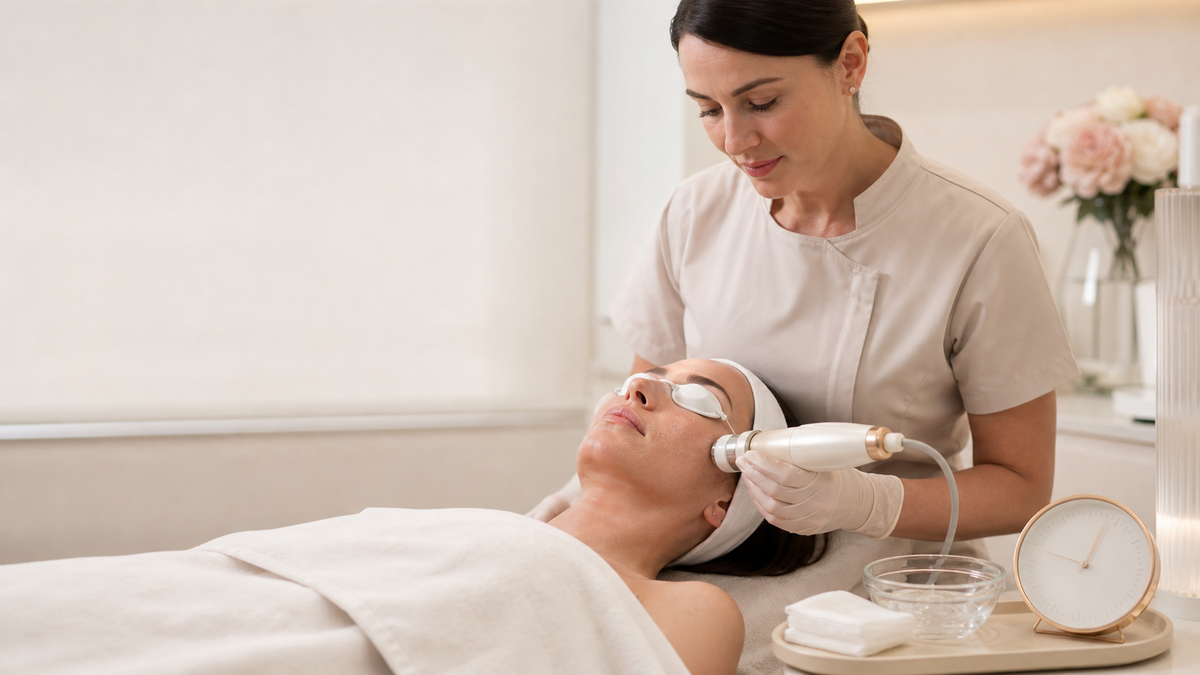
ION LIFT PRO™ is a professional cosmetic gel developed for use with compatible cosmetic iontophoresis devices. Its treatment structure follows an Apply → Treat → Complete sequence.
Device configuration, intensity, treatment duration and movement pattern must follow the manufacturer’s instructions and a documented professional protocol.
Professional Light-Based Pathway
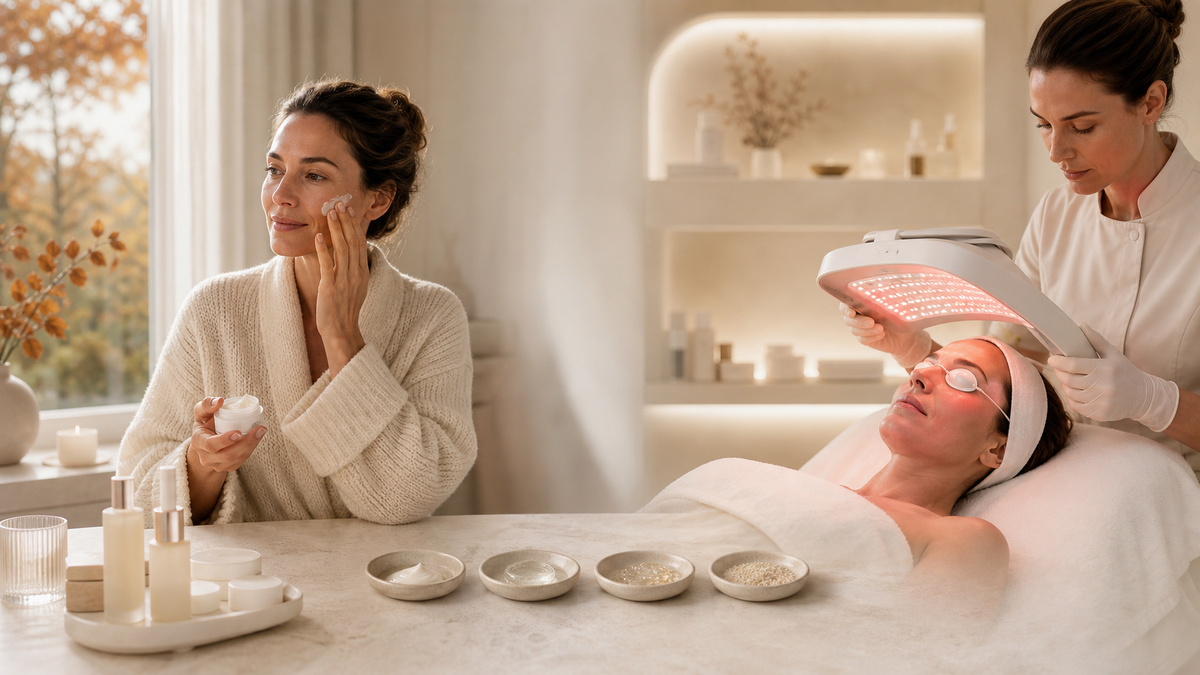
PHOTO FIRM PRO™ is developed to complement compatible professional red light, near-infrared and selected LED facial protocols. Its professional structure follows an Apply → Illuminate → Complete sequence.
Wavelength, exposure duration, positioning and eye protection must always follow the compatible device’s instructions. Combining several technologies is appropriate only when their compatibility, sequence and application parameters have been professionally assessed and documented.
Week-Two Goal
Use one carefully selected professional treatment to address the priority identified during week one—without unnecessary complexity.
Week 3: Build a Connected Home Rhythm
The third week is about consistency. Continue the essential daily routine and follow the aftercare recommendations provided by the professional.
A simple home structure may include:
Morning
- Cleanse gently or refresh the skin as appropriate.
- Apply the selected moisturising skincare.
- Use CONTOUR LIFT™ sparingly around the orbital bone and expression-prone areas.
- Complete the routine with suitable broad-spectrum sun protection.
Evening
- Remove makeup, sunscreen and daily impurities thoroughly.
- Apply the selected hydration and skin-conditioning products.
- Use CONTOUR LIFT™ around the appropriate contour areas.
- Observe the skin before introducing additional intensive steps.
Optional At-Home LED Routine
If at-home LED has been professionally assessed as suitable, the CELONÍQUE x ULTIMA FLEXFIT™ mask can provide a structured connection between professional appointments.
Current CELONÍQUE guidance recommends sessions of 10–20 minutes, three to five times per week. The selected light mode, intensity and frequency must remain consistent with the device instructions and individual suitability.
Cleanse and dry the skin before use, begin with the lowest intensity when sensitivity is a concern, and clean the device after every session. Do not combine LED use with strongly photosensitising products unless advised by an appropriately qualified professional.
Stop using the device if burning, irritation, discomfort or an unusual skin response occurs.
Week-Three Goal
Maintain the results of professional care through a manageable home routine rather than trying to reproduce a clinic treatment independently.
Week 4: Review, Refine and Plan Ahead
At the end of four weeks, compare the skin with the baseline established during week one. The review should focus on visible and sensory changes rather than dramatic promises.
Consider whether the skin now appears or feels:
- Better hydrated and more comfortable
- Smoother and more supple
- Fresher or more radiant
- More even in visible texture
- Less affected by seasonal tightness
- More consistent around the eye contour
Document which steps were used regularly, which were missed and whether any sensitivity occurred. This information can guide the next professional appointment and help determine whether the routine should continue unchanged or be adjusted.
More treatment is not always the answer. If the skin is responding well, maintaining the established rhythm may be more valuable than immediately increasing product strength, device frequency or treatment intensity.
The Four-Week Plan at a Glance
- Week 1 — Foundation: Assess the skin, simplify the routine and support hydration.
- Week 2 — Professional Focus: Select one suitable, compatible professional treatment pathway.
- Week 3 — Home Continuity: Maintain daily care and introduce at-home LED only when appropriate.
- Week 4 — Review: Evaluate visible changes, record the response and refine the next phase.
A Routine Designed for Continuity
The value of a professional-to-home plan lies in its continuity. The professional provides assessment, treatment selection and controlled application. The home routine supports consistency through cleansing, hydration, targeted cosmetic care, sun protection and appropriate device use.
As autumn progresses, the routine can be adjusted according to the skin’s condition, environmental changes and professional recommendations. The aim is not perfection after four weeks, but a stronger foundation for maintaining visible skin quality throughout the season.
The CELONÍQUE approach to skin longevity is deliberate and connected: professional precision, thoughtful home care and consistent attention to the skin over time.
Important: This four-week plan provides general cosmetic skincare information. It does not replace an individual assessment, medical advice or the instructions supplied with a skincare device. CELONÍQUE cosmetic products are not medicines, medical devices or medical treatments. Do not use products or devices on injured, inflamed or severely irritated skin. Persistent or medically diagnosed concerns should be discussed with an appropriately qualified healthcare professional.

Written by CELONIQUE Beauty Lab