


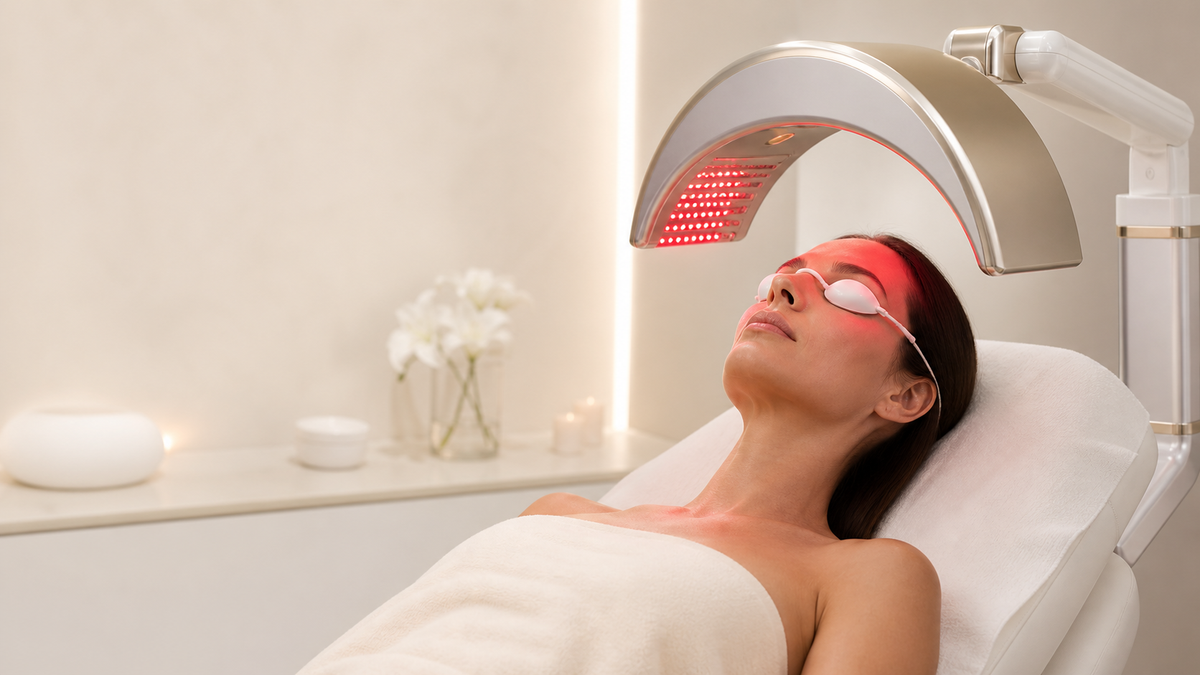
Red Light vs Near-Infrared: Understanding Professional Light-Based Skincare
Red Light vs Near-Infrared: Understanding Professional Light-Based Skincare
Red light and near-infrared light are often discussed together, but they are not identical. They occupy different wavelength ranges, interact with the skin at different depths and must be used according to the specifications of the selected device.
Understanding these differences helps beauty professionals design more responsible cosmetic protocols and explain light-based skincare to clients without making unrealistic promises.
What Is Photobiomodulation?
Photobiomodulation describes the use of low-intensity visible red or near-infrared light to influence biological activity without deliberately damaging the treated tissue.
Unlike ablative lasers, intense pulsed light or treatments designed to create controlled thermal injury, cosmetic LED protocols are generally designed as non-invasive light applications. However, the effect of any session depends on more than the colour of the light.
Important parameters include:
- wavelength
- light intensity or irradiance
- total energy delivered
- distance from the skin
- treatment duration
- treatment frequency
- device design and intended use
This is why two devices described as “red-light devices” may not provide an equivalent cosmetic treatment.
What Is Red Light?
Red light belongs to the visible part of the light spectrum. It is therefore seen by the human eye as red illumination. Scientific literature commonly places the red-light range used in photobiomodulation at approximately 620 to 700 nanometres, although individual cosmetic devices use specific wavelengths within a narrower range.
Compared with near-infrared wavelengths, red light is generally associated with more superficial light interaction. In cosmetic skincare, professional red-light protocols may be used to support:
- a fresh and revitalised-looking complexion
- the visible appearance of smoother skin
- radiance and skin vitality
- the appearance of refined skin texture
- non-invasive skin-longevity routines
These are cosmetic objectives rather than guaranteed medical outcomes. The selected wavelength, dose and treatment schedule remain essential.
What Is Near-Infrared Light?
Near-infrared light, commonly shortened to NIR, begins beyond the visible red spectrum. It cannot normally be seen by the human eye, even when the device is operating correctly.
Longer near-infrared wavelengths generally penetrate more deeply than visible red light. However, penetration is not a fixed number. It is influenced by wavelength, skin characteristics, device output, contact or distance, treatment area and other technical factors.
Professional cosmetic NIR protocols may be positioned to support:
- visible firmness and elasticity
- a smoother-looking complexion
- the appearance of skin vitality
- advanced non-invasive facial routines
- professional skin-longevity concepts
NIR should not be confused with every form of infrared treatment. Different infrared technologies can produce different levels of heat and have different purposes, safety requirements and contraindications.
Red Light and NIR: The Practical Difference
| Feature | Red light | Near-infrared light |
|---|---|---|
| Visibility | Visible to the human eye | Normally invisible to the human eye |
| Wavelength | Shorter than NIR | Longer than visible red light |
| General interaction | More superficial | Generally reaches more deeply |
| Professional use | Used within selected cosmetic LED protocols | Used within selected professional NIR protocols |
| Safety | Follow device instructions and eye-protection requirements | Follow device instructions and eye-protection requirements |
The distinction should not be reduced to “surface versus deep” or “weaker versus stronger.” Each wavelength has its own treatment characteristics, and neither is automatically better.
Why More Light Is Not Necessarily Better
Photobiomodulation is dose-dependent. Increasing treatment time or intensity beyond the device protocol does not guarantee an improved result and may reduce tolerability or produce an unintended response.
Professionals should not estimate treatment settings based on the brightness of the light. Visible brightness does not provide complete information about wavelength, irradiance or delivered energy, and NIR output cannot be reliably assessed by looking at the device.
Use only the settings, distance, exposure duration and treatment frequency permitted by the device manufacturer and the documented professional protocol.
Can Red Light and NIR Be Combined?
Some professional devices provide red and NIR wavelengths within the same treatment system. A combined protocol may offer complementary cosmetic positioning, but the combination must be an intended function of the device.
Professionals should verify:
- the exact wavelengths used by the device
- whether the wavelengths operate separately or simultaneously
- the recommended treatment distance and duration
- the required eye protection
- client-specific contraindications
- which topical products are compatible with the treatment
Do not create an improvised multi-device protocol without a documented compatibility and safety assessment.
The Role of PHOTO FIRM PRO™
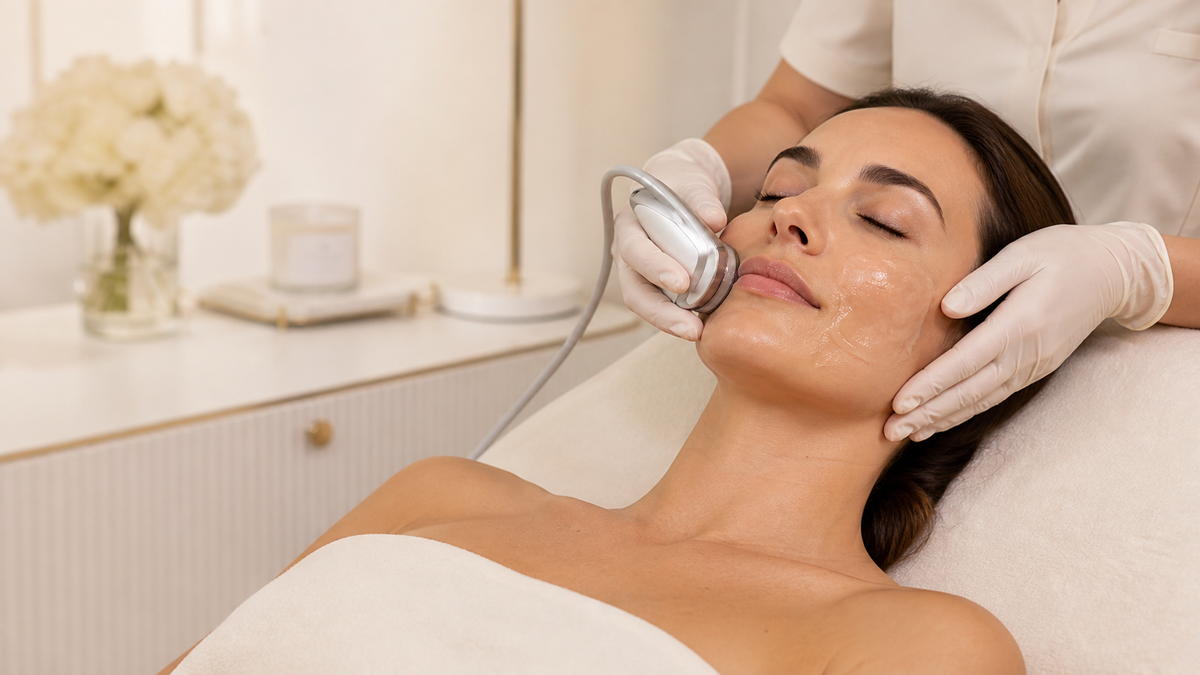
PHOTO FIRM PRO™ by CELONÍQUE is a professional multi-polypeptide cosmetic gel developed for use with compatible professional NIR, red-light and selected LED facial devices.
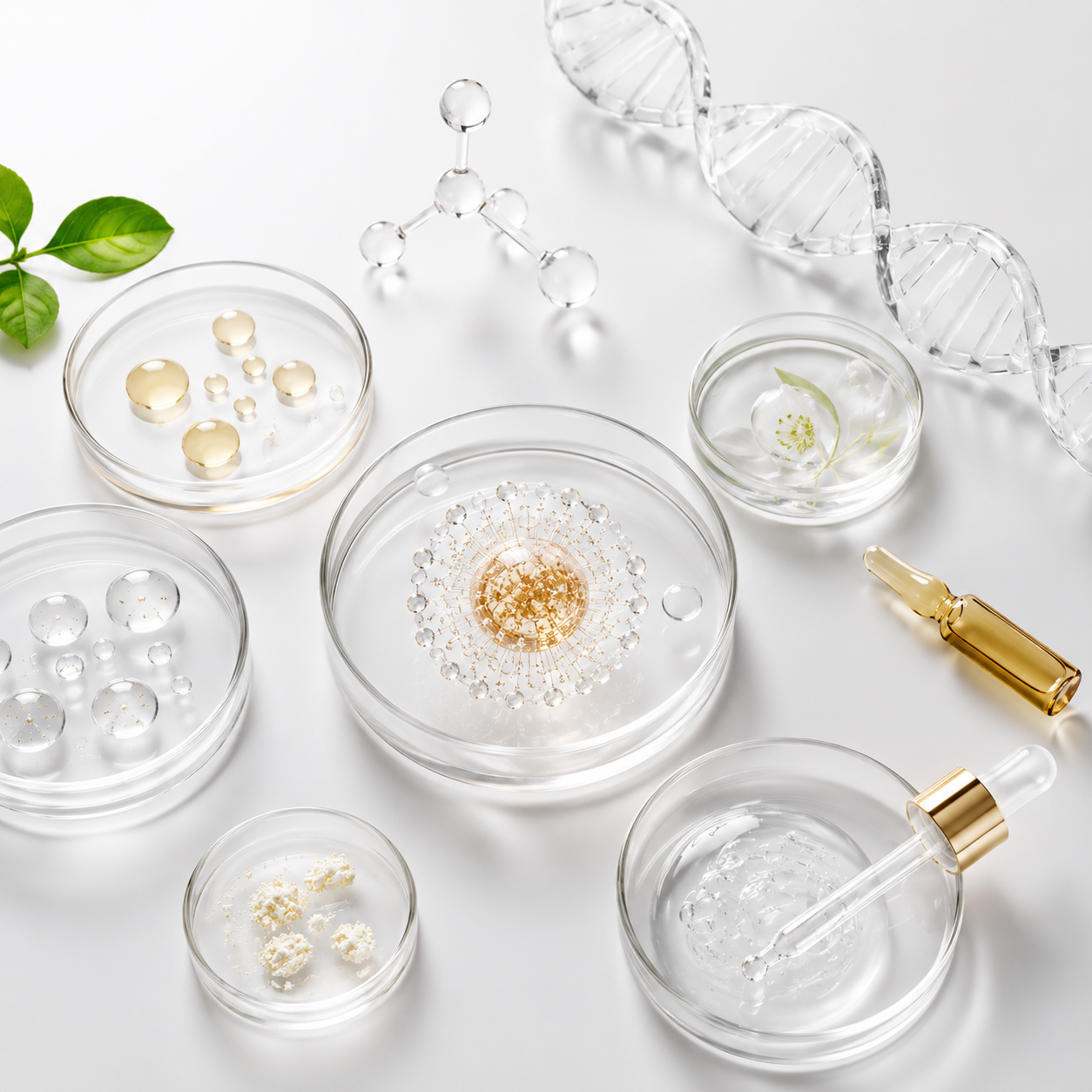
The formula combines CELONÍQUE’s Plant-Based Boosted Exosome Complex with selected polypeptides, niacinamide, ascorbyl glucoside, hyaluronic acid, squalane and other skin-conditioning cosmetic ingredients.
Within a compatible professional protocol, PHOTO FIRM PRO™ is designed to support visible hydration, radiance, smoothness, skin vitality and a firmer-looking complexion.
The professional application sequence is:
Apply → Illuminate → Complete
Apply a thin and even layer to the treatment area, perform the compatible light protocol using the recommended settings, and complete the treatment according to the device and product instructions.
Professional Safety Comes First
Every light-based session should begin with a client-specific suitability assessment. The operator must review the device contraindications, medication-related photosensitivity warnings, skin condition, treatment history and any relevant medical guidance.
Suitable eye protection must be used whenever required by the device instructions. Do not treat irritated, injured or otherwise compromised skin unless the relevant qualified professional and device guidance expressly permit it.
Professional device-assisted treatment should only be performed by a suitably trained skincare or aesthetic professional.
Choosing the Right Light Protocol
The correct question is not simply, “Is red light or NIR better?” A more useful question is, “Which wavelength, device and protocol are appropriate for this client and cosmetic objective?”
Responsible light-based skincare combines suitable equipment, controlled treatment parameters, compatible formulations and clear professional education. CELONÍQUE supports this approach through structured non-invasive protocols and professional cosmetic products such as PHOTO FIRM PRO™.
This article provides general cosmetic skincare information. PHOTO FIRM PRO™ is a cosmetic product and is not a medicinal product, medical device or medical treatment. Always follow the relevant device instructions, contraindications, eye-protection requirements and professional treatment protocol.

Written by CELONIQUE Beauty Lab